
Verruca TREATMENT & Verruca Needling
What is a Verruca? Patient Information Video
Video References:
Video and illustrations created using:
VIDEOSCRIBE., 2025. Animated Videos Made Easy. [Online]. [Accessed 23 April 2025]. Available from: https://www.videoscribe.co/
ISTOCK BY GETTY IMAGES., 2025. STOCK IMAGES ROYALTY FREE . [Online]. [Accessed 23 April 2025]. Available from: www.istockphoto.com
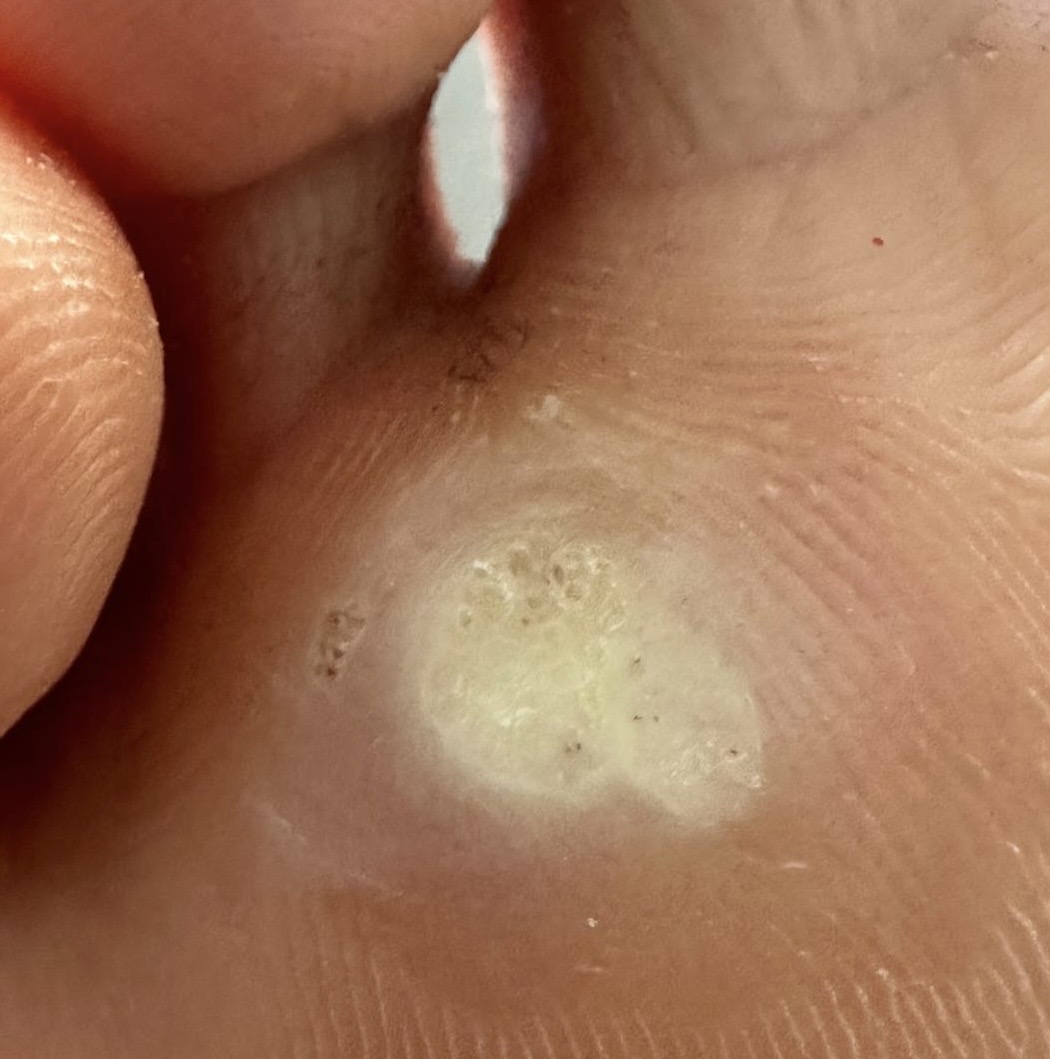
Photograph image of verruca on the plantar of the foot: DOMINICK. S., 2010. Planters warts on the bottom of a child's foot. [Online]. [Accessed 23 April 2025]. Available from: https://www.istockphoto.com/photo/planters-warts-gm182872762-13833069
Photograph image of female in tunic: Authors own
Click to download a Verruca Information Leaflet
What is a Verruca?
A verruca is a harmless skin lesion caused by the Human Papilloma Virus (HPV). It commonly appears on the soles of the feet and can be painful when pressure builds up over the lesion.
How Do You Get a Verruca?
HPV enters the skin through tiny breaks or when the skin is overly moist. It’s often picked up in communal areas like pools or gyms.
What Does a Verruca Look Like?
It may appear as a rough, raised area on the skin with tiny black dots. On the feet, verrucae are often flattened due to pressure.
Why Can They Be Painful?
The thickened skin over the lesion creates pressure, especially when standing or walking, leading to discomfort.
Do They Go Away on Their Own?
Yes, especially in children, verrucae often clear up within months as the body’s immune system responds. However, on the feet, they may persist longer and resist treatment.
Verruca Treatment Options
While verrucae often clear on their own, treatment may help if the lesion is painful or persistent:
-
Scalpel Debridement – Reduces thick skin over the verruca for comfort.
-
Occlusion (Zinc Tape) – Keeps the lesion moist to ease discomfort and possibly stimulate the immune system.
-
Acid Treatments (e.g., Salicylic Acid) – Breaks down skin tissue but may not suit everyone.
-
Cryotherapy (Freezing) – Freezes the lesion to trigger an immune response; can be painful.
-
Microwave Therapy – Uses heat to destroy infected tissue and encourage immune activation.
-
Needling – Under local anaesthetic, punctures the lesion to prompt immune system response.
Should You Treat Your Child’s Verruca?
Often, no treatment is needed unless it causes discomfort. Verrucae are common in children, and tend to resolve naturally regardless of treatment.
When to See a Podiatrist
If your verruca is painful, persistent, or affecting your daily activities, our team can help guide you to the most suitable treatment for you.
Book a consultation today to get tailored advice for your foot care.